
Understanding Nighttime Cat Behavior: 10 Surprising Facts

Cats are intriguing animals, particularly in relation to their nocturnal habits. Numerous cat owners often…


Clicker training is not exclusively for dogs; it is a highly effective and engaging method for teaching cats new behaviors while simultaneously strengthening the bond between the owner and the pet. The benefits of clicker training are numerous, ranging from improved feline behavior to enhanced interpersonal relationships. This guide will provide information on how to begin with the appropriate supplies and techniques, followed by a comprehensive step-by-step guide to teaching basic commands and tricks. It will also address common challenges associated with training and present advanced techniques for managing behavioral issues. Embarking on this rewarding journey will lead to a better-behaved and happier feline companion.
Key Takeaways

Clicker training is a positive reinforcement technique employed in pet training that utilizes a clicker device to mark desired behaviors and reward them with high-value treats. This method is particularly effective for training cats and enhances the human-animal bond by promoting engaging interactions between owners and their feline companions.
Originating from behaviorist psychology, clicker training has become a preferred approach for teaching various skills to pets, including cats. By effectively associating the distinct sound of the clicker with specific actions, this technique leverages the principles of positive reinforcement.
Owners can effectively teach their cats to respond to commands, use a litter box, or perform tricks such as high-fives or rolling over.
Each time the cat successfully demonstrates the desired behavior, the sound of the clicker signifies success, which is then followed immediately by a treat. This clear method of communication fosters a deeper relationship between the pet and the owner, ultimately contributing to a more harmonious living environment.
Clicker training provides a wide array of advantages for both cats and their owners, including enhanced communication, the ability to teach desirable behaviors, and improved bonding through interactive training sessions.
This method facilitates a consistent reward system that reinforces positive actions, thereby helping with the reduction of undesirable behaviors while maintaining an enjoyable and engaging training experience for both parties involved.
Improving behavior and fostering a strong bond with your cat through clicker training entails the implementation of effective training techniques that prioritize positive reinforcement and a consistent reward system. By utilizing high-value treats and engaging activities, owners can teach their cats new skills and tricks while reinforcing desirable behaviors, ultimately enhancing the human-animal bond.
Incorporating specific methods such as sound marking, which involves using a clicker or a distinct noise to indicate correct behavior, is essential for ensuring clarity and precision in timing. For example, clicking immediately at the moment the cat performs the desired action allows the pet to form a direct association between the behavior and the reward.
This approach not only enhances the cat’s learning process but also fosters a sense of trust and understanding between the cat and its owner. When positive reinforcement is consistently applied, such as offering a favored treat or affection following each successful completion of a task, it encourages the repetition of the behavior, thus creating a joyful and cooperative environment for both the cat and the owner.
Initiating clicker training necessitates a selection of essential supplies and a comprehension of fundamental techniques that can enhance the effectiveness and enjoyment of training sessions.
Cat owners should acquire a dependable clicker device, premium treats such as Churu treats or wet food, and establish a well-defined plan for interactive training that actively engages their cats while instructing them in specific behaviors.
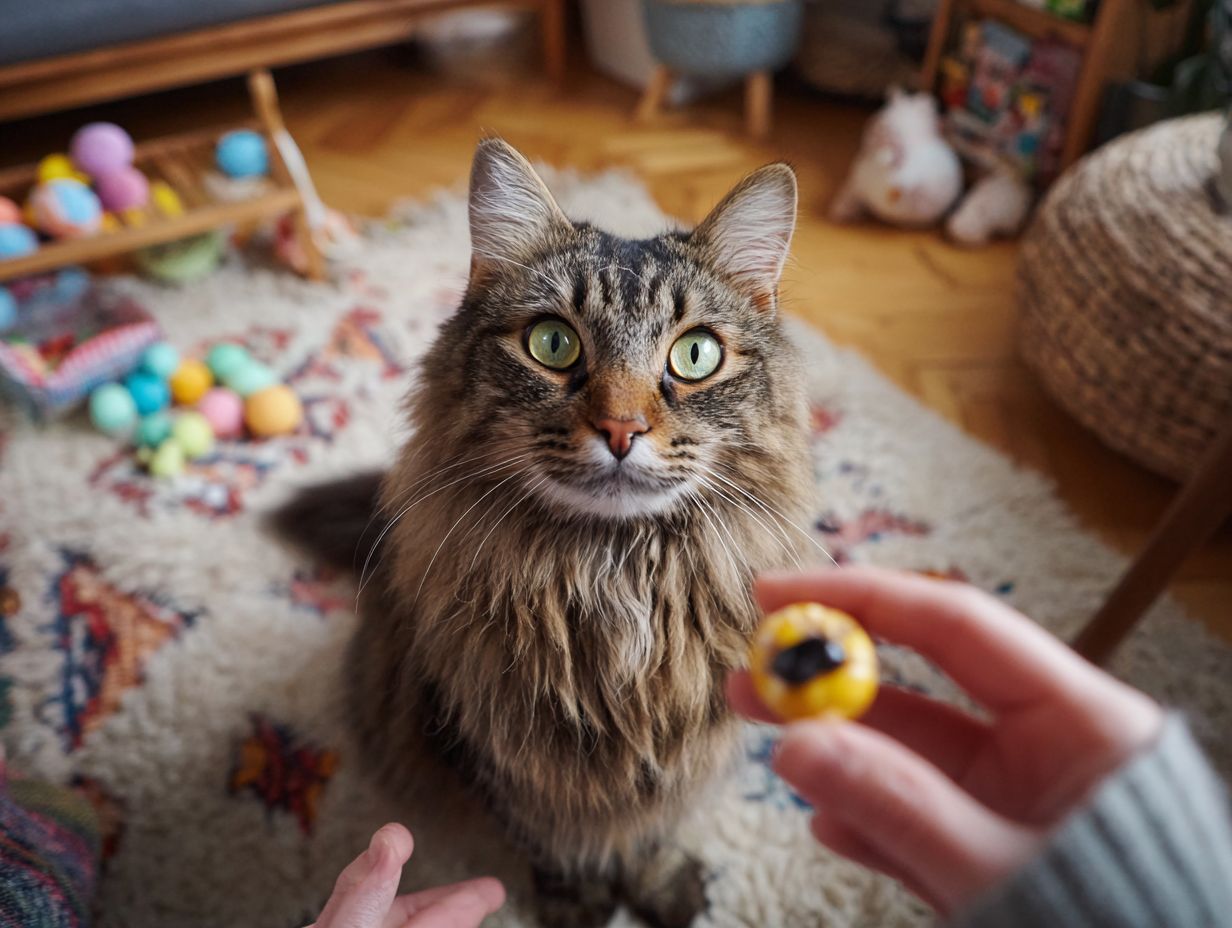
Essential supplies for clicker training include a clicker device to effectively mark desired behaviors, high-value treats to motivate the cat, and training tools such as a target stick to facilitate the learning process. Mastery of fundamental techniques, including sound association and treat motivation, is crucial for a successful training journey and for enhancing the cat’s skills.
Moreover, selecting a clicker that is comfortable to hold can significantly improve the training experience. The clicker acts as a consistent bridge between the desired behavior and the reward, thereby fostering clear communication between the trainer and the pet.
High-value treats should be small, soft, and easily chewable, ensuring that the cat remains engaged and focused throughout the training sessions. The target stick serves as a visual cue, helping with guiding the cat to perform specific actions and simplifying the completion of complex tasks.
Collectively, these tools and techniques establish an effective training environment that nurtures a bond of trust and cooperation between the trainer and the feline companion.
A comprehensive, step-by-step guide to clicker training your cat encompasses a range of methods and techniques aimed at enhancing the training process. This structured approach facilitates success for both the owner and the cat.
By utilizing clear training cues and providing timely rewards for prompt responses, one can effectively instruct the cat in acquiring new behaviors and tricks throughout the training experience.
Teaching basic commands and tricks to a cat through clicker training involves the use of clear training cues alongside a distinct click sound to mark desired behaviors immediately. Engaging a feline companion in such interactive activities not only provides mental stimulation but also contributes significantly to their overall training success.
This technique can be effectively employed to teach commands such as “sit” or “come,” as well as entertaining tricks like “high five” or “roll over.” The click sound functions as an immediate reward marker, informing the cat that they have performed the desired action correctly.
To ensure a positive training experience, it is essential to utilize high-value treats that excite the pet, as this can enhance their motivation to respond. Maintaining training sessions that are short, ideally lasting five to ten minutes, helps prevent the cat from losing interest and fosters better focus.
Practicing in a quiet environment with minimal distractions can also improve engagement, making the learning process easier and more enjoyable for the cat.
Troubleshooting common issues in clicker training requires a systematic approach to identifying training challenges and implementing targeted strategies that enhance the effectiveness of the training on the cat’s behavior.
By gaining a comprehensive understanding of the pet’s response behavior and ensuring prompt responsiveness to cues, one can effectively address obstacles and improve the overall training experience.

Effective strategies for success in clicker training are essential for addressing undesirable behaviors and ensuring proper reinforcement throughout the pet training process. By implementing these strategies consistently, pet owners can enhance their cat’s learning experience and cultivate a strong bond through positive interactions.
Understanding the importance of timing and consistency in the use of the clicker is critical for reinforcing desired behaviors. Delaying the click after the desired action can lead to confusion for the pet, resulting in incorrect associations or frustration.
Plus proper timing, it is vital to maintain motivation through a variety of rewards-such as treats, praise, or play-to ensure that training sessions remain enjoyable. Patience is crucial, as recognizing that each pet learns at its own pace will help mitigate challenges that may arise during the training process.
When these principles are applied thoughtfully, they contribute to a more effective and rewarding clicker training experience.
Advanced clicker training techniques offer effective solutions for addressing specific behavioral issues in cats by utilizing the clicker device as a tool for sound association and reinforcing complex training methods.
These techniques build upon foundational training and broaden the range of behaviors that can be taught, ultimately enhancing a cat’s skills and overall behavior.
Utilizing clicker training to address behavioral issues can lead to significant improvements for both cats and their owners, as positive reinforcement techniques are effective in transforming unwanted behaviors into desirable actions. By concentrating on specific behaviors and comprehending the impacts of training, owners can navigate their cat’s training process with patience and consistency.
This method facilitates clear communication between the owner and the cat, with each click indicating a desired action and reinforcing positive behavior. For example, if a cat exhibits aggression during playtime, owners can first identify the triggers, such as overstimulation or fear.
By redirecting the cat’s energy towards appropriate toys and rewarding calm behavior with a click and treat, owners can foster more peaceful interactions.
However, it is crucial to remain mindful of the cat’s emotional state and ensure that the training environment is devoid of stressors. This awareness contributes to establishing a stable foundation for effective behavioral modification.
Maintaining training and enhancing skills through clicker training techniques is essential for reinforcing learned behaviors and ensuring continued progress in a cat’s training journey. Regular interactive training sessions can solidify previously taught skills while introducing new commands and tricks, creating an engaging and rewarding experience for both the cat and the owner.
To cultivate an environment conducive to growth, it is crucial to establish a routine that effectively balances reinforcement and innovation. By incorporating a variety of training methods, such as agility exercises or scent work, training sessions not only become more stimulating but also align with the cat’s natural instincts and behaviors.
Consistent utilization of positive reinforcement will encourage the feline to view learning as an enjoyable challenge rather than a burdensome task. Additionally, adjusting the frequency and complexity of training as the cat progresses will help maintain interest and motivation, ensuring that they remain enthusiastic participants in their own learning process.

How do I start clicker training my cat?
To begin clicker training, you will need a clicker and some small treats. Start by getting your cat’s attention and pressing the clicker, followed by giving them a treat. This will associate the clicking sound with receiving a reward. Repeat this process a few times until your cat understands the connection.
What are the benefits of clicker training for cats?
Clicker training can help improve your cat’s behavior and strengthen your bond with them. It can also provide mental stimulation and help with problem behaviors such as scratching or meowing excessively.
Can any cat be clicker trained?
Yes, any cat can be clicker trained as long as they are food-motivated and have the ability to learn. Some cats may require more patience and time, but with consistent training, most cats can learn to respond to a clicker.
How long does it take to clicker train a cat?
The length of time it takes to clicker train a cat can vary depending on their personality and willingness to learn. Some cats may pick up on the training quickly, while others may take weeks or even months to fully understand the concept.
Can clicker training be used for specific behaviors?
Yes, clicker training can be used to teach your cat specific behaviors such as sitting, coming when called, or walking on a leash. By breaking down the behavior into smaller steps and rewarding each step, you can train your cat to perform a variety of behaviors.
Are there any tips for successful clicker training?
Consistency and patience are key when clicker training your cat. It’s important to keep training sessions short and end on a positive note. Also, make sure to use high-value treats that your cat enjoys and keep distractions to a minimum to help your cat stay focused.

Cats are intriguing animals, particularly in relation to their nocturnal habits. Numerous cat owners often…

Cats, frequently perceived as aloof and independent creatures, can unexpectedly display aggressive behaviors that may…