
Why Your Cat Sneezes: Common Causes and Solutions

Cat sneezing is a common yet often perplexing phenomenon for cat owners. While an occasional…

Hydration is essential for a cat’s health; however, many pet owners often underestimate its significance. Cats, due to their unique physiology, require adequate water intake to maintain their overall well-being and to prevent serious health complications. This text examines the necessity of water for cats, outlines how to recognize signs of dehydration, and discusses potential reasons that may lead to a decreased water intake in your feline companion. Additionally, it provides practical recommendations for encouraging improved hydration habits and indicates when it is advisable to seek consultation with a veterinarian regarding any concerning issues. By understanding the vital role that water plays in their lives, pet owners can help ensure their cats remain happy and healthy.
Key Takeaways

Hydration is essential for the health and well-being of cats, as it directly influences their overall functioning and can prevent serious health issues, particularly dehydration, which is a common concern among pet owners.
Cats, recognized for their distinct drinking behaviors, typically require a sufficient supply of fresh and clean water to maintain optimal hydration levels. However, they often do not meet their hydration needs due to various factors, including dietary choices and environmental conditions.
Recognizing the early signs of dehydration is crucial, as it enables timely veterinary intervention. Therefore, it is imperative for pet owners to regularly monitor their cats’ drinking habits and ensure they have consistent access to adequate hydration.
Cats require adequate water intake to maintain their overall health, as hydration is essential for numerous bodily functions, including digestion and temperature regulation.
These intriguing animals display instinctual behaviors regarding drinking, often exhibiting a preference for fresh, running water rather than stagnant sources. Their ancestry as desert-dwelling creatures has influenced their hydration strategies; they have adapted to derive moisture from their prey.
Moreover, the type of food they consume significantly affects their hydration levels, with canned food offering more moisture compared to dry kibble. Veterinarians highlight the importance of ensuring regular water intake, as insufficient hydration can lead to serious health issues, such as urinary tract complications or kidney disorders.
It is imperative for cat owners to provide their feline companions with consistent access to fresh water, while also considering their preferences to encourage healthy drinking habits.
Recognizing the signs of dehydration in cats is crucial for pet owners to maintain the health of their feline companions and prevent serious health complications associated with this condition, such as kidney disease or heatstroke.
Symptoms may include persistent lip licking, dry gums, and a decrease in appetite, which may suggest inadequate water consumption.
Careful monitoring of a cat’s water intake, along with observing any changes in behavior or physical condition, can aid in identifying early warning signs of dehydration. This vigilance allows for timely intervention and the appropriate veterinary assistance when necessary.
Identifying dehydration in cats can present challenges; however, there are several key indicators that pet owners should monitor, including dry gums, lethargy, and reduced skin elasticity.
A valuable technique for assessing hydration status is skin tenting. This involves gently pinching the skin at the back of the neck; if the skin takes longer than one second to return to its original position, it may suggest dehydration.
Additionally, assessing the moisture level in the mouth is a practical approach; healthy cats generally exhibit moist, pink gums.
It is important to recognize that severe dehydration may lead to more critical symptoms, such as sunken eyes or an elevated heart rate.
In any instance where dehydration is suspected, seeking prompt veterinary consultation is essential to ensure the safety and well-being of the feline companion.

Decreased water intake in cats can arise from various medical and behavioral factors, potentially resulting in serious health complications such as dehydration if not addressed in a timely manner.
Common medical conditions influencing a cat’s drinking habits include kidney disease, diabetes, and gastroenteritis. On the other hand, behavioral factors may include a preference for specific types of food, such as dry food, or insufficient access to fresh water.
It is essential for pet owners to understand these potential causes to ensure their cats remain adequately hydrated and maintain optimal health.
Several medical conditions in cats, such as kidney disease and diabetes, can lead to decreased water intake, making careful monitoring and veterinary consultation essential.
These health issues can significantly alter a cat’s hydration habits, often resulting in reduced water consumption. Additionally, behavioral factors-including stress, changes in the environment, and preferences for specific types of water bowls-can influence a cat’s willingness to hydrate.
Understanding the interplay between these medical and behavioral aspects is imperative for any responsible pet owner. By closely observing their cat’s drinking patterns and seeking veterinary advice when necessary, owners can ensure that their feline companions receive the hydration required to maintain optimal health.
Encouraging increased water consumption in cats is critical for ensuring proper hydration and overall health. Pet owners can implement several effective strategies to promote this important habit.
Simple modifications, such as providing fresh water in a clean bowl, incorporating hydration-friendly foods like canned food, and utilizing water fountains, can significantly enhance a cat’s water intake.
Furthermore, it is advisable for pet owners to actively monitor their cats’ drinking habits and adapt their approach according to each cat’s individual preferences and behaviors.
Implementing various strategies and techniques can significantly enhance a cat’s water intake, thereby ensuring their hydration and overall health.
Cats, much like other pets, possess distinct preferences regarding hydration. One effective approach is to offer flavored water, such as chicken or fish broth, which may encourage increased consumption. Additionally, altering the feeding locations can stimulate their interest; a new environment may promote exploration and, consequently, hydration.
Combining dry food with wet food not only elevates moisture content but also enhances mealtime enjoyment and flavor.
It is imperative for pet owners to recognize that each cat has individual preferences, highlighting the necessity of regularly monitoring their hydration levels to adapt strategies as needed.
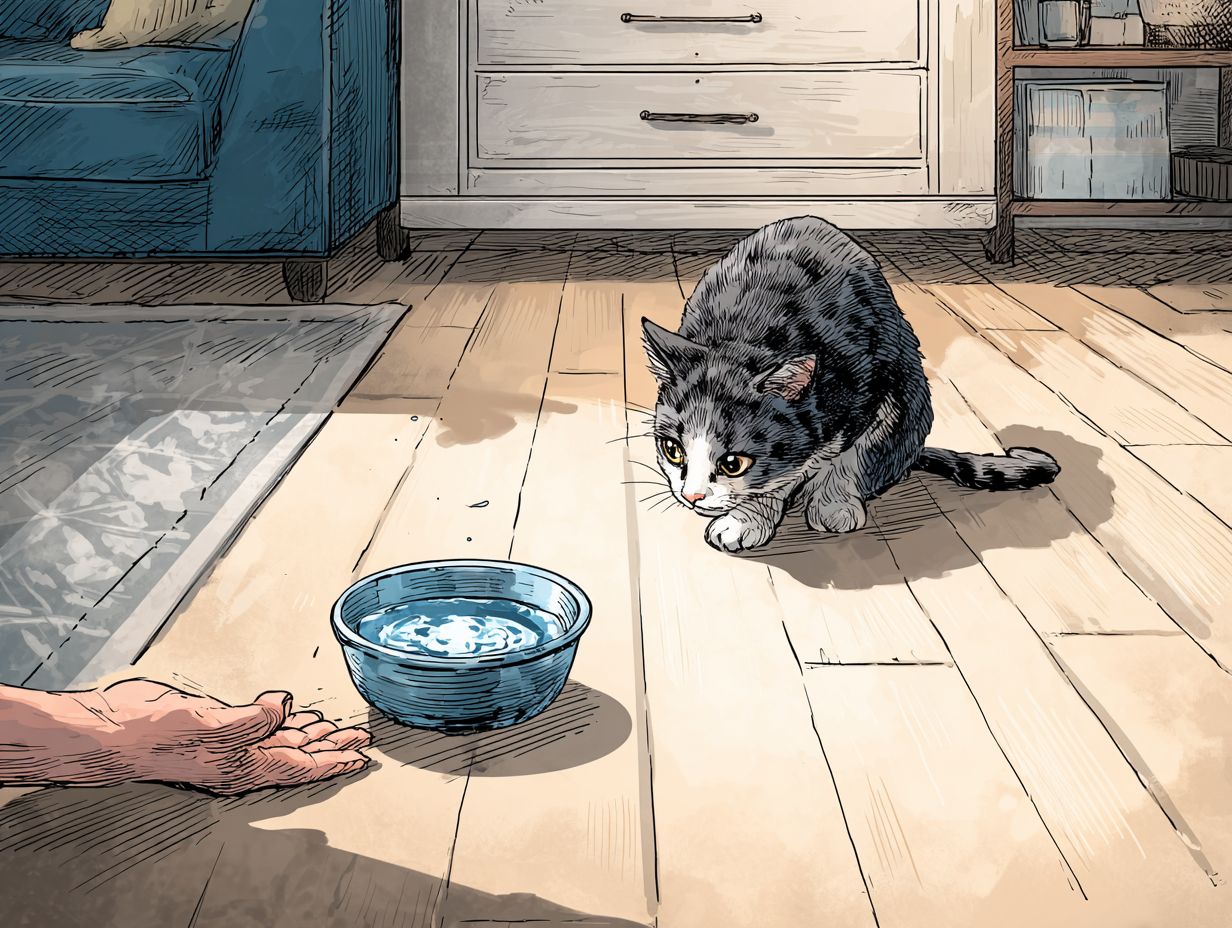
Recognizing the appropriate time to seek veterinary assistance for a cat is essential, particularly when observing significant signs of dehydration that may suggest underlying health problems.
Symptoms such as persistent vomiting, lethargy, and a notable decrease in appetite warrant immediate consultation with a veterinarian, as they may indicate conditions such as pancreatitis or inflammatory bowel disease.
It is imperative for pet owners to be vigilant and proactive in monitoring their cat’s health and hydration levels to ensure timely medical intervention.
Recognizing the signs of severe dehydration in cats is essential for ensuring timely veterinary intervention, as this condition can lead to significant health complications, including kidney failure or heatstroke.
Pet owners should remain vigilant for indicators such as dry mouth, sunken eyes, and diminished skin elasticity, all of which signify a critical loss of hydration. Additionally, behavioral alterations-such as lethargy, decreased appetite, or unusual hiding behaviors-may also suggest that a cat is unwell.
If these symptoms are observed, it is imperative to seek veterinary assistance promptly, as early intervention can significantly enhance the prognosis.
To prevent dehydration, it is crucial to provide cats with constant access to fresh water and consider incorporating wet food into their diet for added moisture, thereby supporting their overall health and well-being.

Why is my cat not drinking water?
There could be several reasons why your cat is not drinking water. It could be due to an underlying health issue, a change in environment, or simply a dislike for their water bowl.
What are the signs of dehydration in cats?
The signs of dehydration in cats include dry and sticky gums, loss of skin elasticity, sunken eyes, and lethargy. If you notice any of these symptoms, it’s important to encourage your cat to drink water immediately.
How can I get my cat to drink more water?
You can try adding wet food to your cat’s diet, using a pet fountain, or placing multiple water bowls around the house. You can also try adding ice cubes to their water bowl to make it more appealing.
What are some health issues that can cause a cat to not drink water?
Illnesses such as kidney disease, urinary tract infections, and diabetes can all affect a cat’s thirst and cause them to not drink enough water. It’s important to take your cat to the vet if you suspect a health issue.
Is it normal for cats to not drink a lot of water?
Cats naturally have a low thirst drive and may not drink as much water as other animals. However, it’s important to make sure they are drinking enough water to stay hydrated and prevent health problems.
What are some tips for keeping my cat hydrated?
Aside from providing fresh water daily, you can also try adding low-sodium chicken broth to their water, giving them wet food, or incorporating more moisture-rich treats into their diet. Regularly cleaning their water bowl can also help entice them to drink more.

Cat sneezing is a common yet often perplexing phenomenon for cat owners. While an occasional…

Cat constipation is a concerning issue for both cats and their owners. Understanding its causes…